
Spend an afternoon with a retailer that has recently launched a marketplace and you will notice where the hours go. Someone has to find brands, sign each one, map their catalog and settle every order.
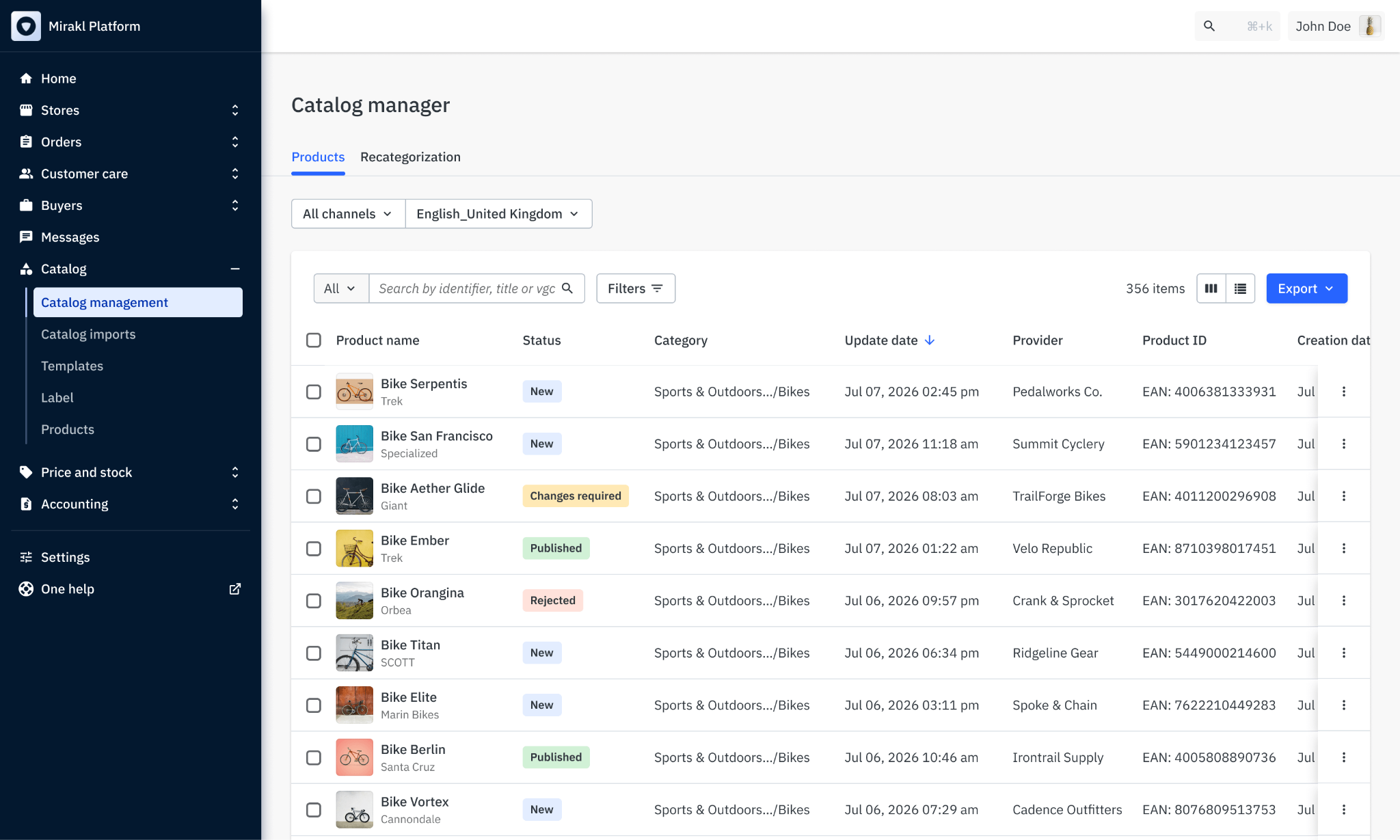
Mirakl is the best-known name in marketplace software, and teams look at Mirakl alternatives for cost as volume grows, long implementations and the work of signing suppliers one at a time. The best Mirakl alternatives in 2026 come at that problem from different directions.
Here are five worth a closer look, and where each one fits.
Four questions to settle first
- Do you need supplier management tools, or the suppliers as well?
- How quickly can a new supplier go live and take orders?
- Does it run on your current storefront and ERP, with no replatform?
- Does settlement follow each shipment automatically?
Ask these of every vendor before comparing feature lists. The first question matters most, because it decides whether your team spends next quarter recruiting brands or selling their products.
The 5 best Mirakl alternatives in 2026
1. Carro: best Mirakl alternative overall
Carro is dropship and marketplace software that connects retailers to vetted brands and distributors through shared product data, orders and settlement. Its standout difference is the network: through Carro’s Merchant Services, a retailer adds supplier-held products under one commercial relationship instead of signing every supplier.
- A curated network of 1,500,000 products from established brands, plus your existing suppliers
- Sync of supplier stock, product data and partner price lists
- Automated order routing, including one order split across several suppliers
- Settlement triggered by the shipment, with fees and returns tied to each order
- Connections for Shopify, Magento 2, WooCommerce and BigCommerce, plus EDI, API, SFTP and CSV
Every new supplier follows the same onboarding path, with hands-on help for brands without technical teams. Retailers test new brands on real demand with no purchase order, and keep only what sells.
- Best for: retailers and marketplace operators adding assortment without owning stock.
- Less suited to: digital goods, subscriptions and B2B procurement with contract pricing.
2. Logicbroker: best for enterprise EDI dropship orchestration
Logicbroker is built for enterprise retailers and brands that already run large supplier networks. It assumes you bring your own suppliers, and onboarding can be tedious for vendors without technical teams.
- EDI, API, XML, CSV and JSON connections through one endpoint
- Order routing based on inventory, SLAs and cost
- Predictive alerts on exceptions before they turn into late shipments
- Support for dropship, marketplace and B2B fulfillment models
Its standout strength is connectivity, so partners can join whatever their technical setup. Large enterprises such as Samsung, Walgreens and Home Depot run their supplier networks on it.
- Best for: enterprises with dozens of existing suppliers on EDI.
- Less suited to: retailers that need help finding new brands.
3. Virto Commerce: best for B2B marketplaces on a composable stack
Virto Commerce is composable ecommerce with marketplace features for medium-to-large B2B organizations. It offers deep flexibility, though it needs .NET and C# skills and takes longer to set up than SaaS alternatives.
- API-first, headless architecture for commerce and marketplace together
- Contract pricing, multi-tier approvals and bulk ordering built in
- Cloud to on-premises deployment, plus an open-source Community Edition
- Catalog management scaled to hundreds of millions of SKUs
Its standout feature is ownership, with full control of the code and the deployment model. HEINEKEN, Bosch and OMNIA Partners use it for complex catalogs.
- Best for: manufacturers, distributors and buying groups with complex B2B rules.
- Less suited to: teams that need a fast go-live without developers.
4. Marketplacer: best for adding a marketplace with your own sellers
Marketplacer adds a third-party seller layer to an existing ecommerce storefront. It manages the partners you bring rather than sourcing them, and complex taxonomies can need technical help.
- Connectors for Shopify Plus, Adobe Commerce, BigCommerce, Salesforce Commerce Cloud and commercetools
- Seller onboarding, catalog management, commissions and payments
- Support for retail, grocery and loyalty marketplace models
- Shipment tracking across multi-vendor orders
It stands out for flexibility across marketplace models without a replatform. Customers often praise the team’s marketplace expertise as much as the software.
- Best for: mid-market and enterprise retailers with supplier relationships in place.
- Less suited to: retailers starting without suppliers.
5. Rithum: best for multichannel reach
Rithum, formed from CommerceHub and ChannelAdvisor, connects brands and retailers across 420+ marketplaces and channels. Its reach is the draw, while users describe a rigid structure that feels heavy for a focused dropship program.
- Listing, inventory and repricing management across channels
- Dropship programs and private marketplaces with selected brands
- Retail media tools for marketplace visibility
- Supplier discovery for expanding assortment
Its network is one of the largest in commerce, spanning more than 40,000 brands and retailers. That scale suits syndication across many channels more than a curated dropship program.
- Best for: large brands and retailers operating across many channels at once.
- Less suited to: teams that only need curated assortment growth.
Best Mirakl alternatives side by side
The table lines up the five tools on where they start, whose suppliers they work with and where each pays off first. Most retailers can rule out two or three from this view alone.
| Tool | Starting point | Supplier network | Storefronts | Strongest first use |
|---|---|---|---|---|
| Carro | Assortment growth without stock | 1,500,000 products from vetted brands, plus your own suppliers | Shopify, Magento 2, WooCommerce, BigCommerce | Testing new brands with no purchase order |
| Logicbroker | EDI orchestration at scale | Your own suppliers | Any system through one API endpoint | Connecting existing EDI suppliers |
| Virto Commerce | Composable B2B commerce | Your own sellers | Any frontend through its APIs | B2B ordering with contract pricing |
| Marketplacer | A marketplace layer on your store | Your own sellers | Shopify Plus, Adobe Commerce, BigCommerce, Salesforce Commerce Cloud, commercetools | Onboarding sellers you already know |
| Rithum | Multichannel listings | Large brand and retailer network | 420+ channels | Syndicating listings across marketplaces |
Choosing your Mirakl alternative
Start with your supplier situation. If you already run dozens of suppliers on EDI, Logicbroker fits, and if contract pricing and approvals define your business, Virto Commerce does. Marketplacer suits retailers adding a seller layer for partners they already have, and Rithum suits brands chasing reach.
If the goal is a bigger assortment without buying stock or signing every brand yourself, the supplier network matters as much as the software. That combination is where Carro stands out among Mirakl alternatives in 2026, and a demo on your own catalog shows it quickly.
Mirakl alternatives FAQs
Why do companies look for Mirakl alternatives?
The usual reasons are total cost as volume grows, implementation timelines measured in months, and the work of sourcing and contracting suppliers. Teams that want faster time to value often look for tools that bring a supplier network as well as software.
What is the best alternative to Mirakl?
For retailers and marketplaces that want to grow assortment without buying stock, Carro is the strongest overall alternative. Logicbroker suits enterprises with established EDI suppliers, and Virto Commerce suits complex B2B models.
Can I switch from Mirakl without replatforming?
Yes, with tools that sit beside your existing storefront. Carro, for example, connects to Shopify, Magento 2, WooCommerce and BigCommerce and runs alongside your payments, ERP and accounting systems.
How long does it take to launch with a Mirakl alternative?
It ranges from weeks to several months, depending on integrations and supplier sourcing. Tools with pre-built storefront connectors and an existing supplier network usually go live fastest.
Do Mirakl alternatives work with Shopify?
Yes, several connect directly to Shopify, so the store itself stays as it is. Carro offers a Shopify app for retailers and brands, and Marketplacer connects to Shopify Plus.


Leave a Reply