Planning a Milan 3-day itinerary? This guide covers the must-see landmarks, the fashion district, and how to get around a city that mixes a Gothic cathedral with a modern skyline.
Key takeaways
- Iconic stops: the Duomo, the Galleria Vittorio Emanuele II, and Sforza Castle.
- Hidden gems: the Navigli canal district and Brera’s quiet, art-filled backstreets.
- Recommended transport: RV campervans available to rent from Indie Campers, parked outside Area C, then the Milan metro and trams for getting around.
- Recommended budget: $180 to $350 per person for 3 days, covering accommodation, food, transport and entry tickets.
- Best time to go: spring, April to May, for mild weather and manageable crowds.
Milan itinerary, 3 days: at a glance
| Day | Location | Top highlights |
|---|---|---|
| Day 1 | Duomo and city centre | Duomo rooftop, Galleria Vittorio Emanuele II, La Scala. Try risotto alla milanese. |
| Day 2 | Brera and Navigli | The Last Supper, Pinacoteca di Brera, Navigli aperitivo. Try cotoletta alla milanese. |
| Day 3 | Sforza Castle and Porta Nuova | Sforza Castle, the fashion district, Bosco Verticale. Try panettone. |
Why you will love a 3-day trip to Milan
Milan does not fit the usual picture of Italy. A Gothic cathedral sits a few blocks from glass skyscrapers, and a canal district built for medieval trade now hosts some of the city’s best aperitivo bars.
That contrast is part of what makes a Milan itinerary worth planning properly, since the city rewards a mix of classic sightseeing and neighbourhood wandering. One afternoon can take you from marble spires to a courtyard full of contemporary art, all within a short walk.
An RV adds real flexibility to the trip. Central Milan charges a daily fee for driving into the historic core, so parking on the edge of the city works better than hunting for a spot downtown. From there, the metro handles the rest. That same RV can also carry you on to Lake Como or Turin once Milan wraps up, without a new hotel booking for every stop.
Food and culture tie the whole visit together. Milan gave the world risotto alla milanese, saffron-coloured and rich, along with cotoletta alla milanese, a breaded veal cutlet larger than the plate it is served on. The city also popularised aperitivo, the early-evening ritual of a drink paired with a spread of snacks, and panettone, the sweet bread now found on holiday tables worldwide.
Best time to visit Milan
The season you visit shapes both the crowds you will deal with and how comfortable it feels to walk between sights. Milan runs on a fashion calendar as much as a weather one, so a few extra factors come into play compared with other Italian cities.
Spring, March to May
Spring brings mild temperatures and fewer crowds than summer, making it one of the more comfortable seasons for a packed sightseeing schedule. Milan Fashion Week in late February and September pushes hotel prices up, so April and May tend to be calmer. Average temperatures run 9 to 20C, with mild and occasionally rainy weather, moderate crowds and mid-range prices.
Summer, June to August
Summer gets hot and humid, and August in particular sees many locals leave the city for holiday, which means some restaurants close for the month. Museums and indoor attractions become a welcome break from the heat. Average temperatures run 19 to 30C, with peak-season prices.
Autumn, September to November
Autumn brings cooler, comfortable weather and coincides with Milan Fashion Week in late September, which draws a fashion-focused crowd but also energy to the city. October and November are quieter and easier on the wallet. Average temperatures run 10 to 21C.
Winter, December to February
Winter is cold and often grey, but the Christmas markets around the Duomo and the lead-up to Milan Fashion Week in February give the city a distinct energy. This is generally the cheapest and least crowded time to visit outside fashion week itself. Average temperatures run 1 to 8C.
Spring and autumn both offer the easiest balance of good weather and manageable crowds, without the price spikes that come with fashion week or peak summer.
Are 3 days enough to visit Milan?
Yes. Three days is enough to see the city’s main landmarks and still leave room to explore a neighbourhood or two at a relaxed pace. The trick is picking a focused route instead of trying to see every district on the map.
This itinerary spends day one in the historic centre, day two between Brera and the Navigli canals, and day three around Sforza Castle and the modern Porta Nuova skyline. With that structure, you will see the Duomo, the Last Supper, Sforza Castle and the fashion district, along with time for a proper aperitivo each evening.
A common mistake is trying to add a Lake Como day trip on top of these three days, which usually means rushing both Milan and the lake. Save that extension for a fourth day instead.
How to get around Milan
Milan’s historic centre sits inside Area C, a congestion charge zone that costs €7.50 a day to drive into, active seven days a week as of 2026. That makes parking on the edge of the city and using public transport the easier choice for most of your visit.
The metro covers the city well, with four lines connecting the main sights, and trams fill in the gaps between metro stops. A single ticket costs around €2.20 and covers 90 minutes of travel, including transfers. A day pass is worth buying if you are making more than four or five trips.
An RV still works well for the trip overall, since it beats booking separate hotels if Milan is one stop on a longer Italy trip. Park outside Area C, close to a metro stop, and use the RV as your base while you explore the city centre on foot and by public transport. Several campsites and RV-friendly parking areas sit outside the ring road that marks Area C’s boundary.
Booking RV rentals in Milan through Indie Campers gives you unlimited mileage on company-owned vehicles, so extending your trip to Lake Como or the Alps costs nothing extra in mileage fees.
The best 3-day itinerary for Milan
Day 1: Duomo and city centre
Morning, 9am: the Duomo and its rooftop
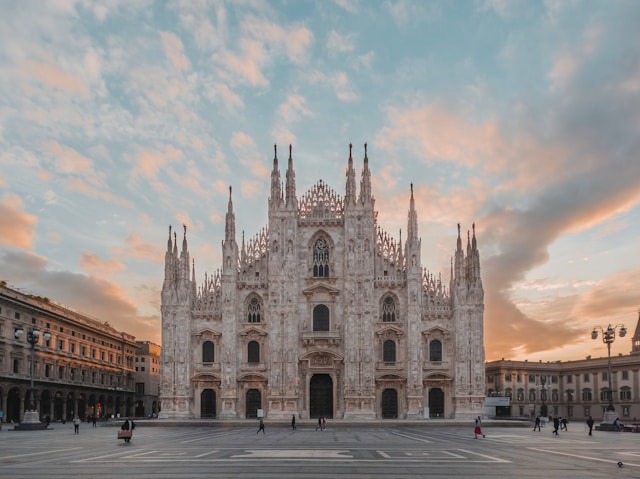
Start at the Duomo di Milano, the marble Gothic cathedral that took nearly 600 years to complete and still anchors the city’s main square. Construction began in 1386, and the facade was not fully finished until the early 1800s under Napoleon’s orders. More than 3,400 statues decorate the exterior, more than any other building in the world.
Step inside to see the stained glass windows and the crypt below, then take the lift up to the rooftop terraces. From the roof, you can walk among the cathedral’s spires and get a close look at the golden Madonnina statue that watches over the city. Give yourself about two hours for the cathedral and rooftop combined.
Practical tip: book your rooftop ticket online in advance, since same-day tickets often sell out during peak season.
Afternoon, 12pm: Galleria lunch and La Scala
For lunch, walk into the Galleria Vittorio Emanuele II, the glass-domed shopping arcade connecting the Duomo to La Scala. Built in the 1860s, it is often called one of the world’s oldest shopping malls, and the iron and glass ceiling still impresses more than 150 years later.
Grab a table at one of the cafes under the dome and order a plate of risotto alla milanese. Prices here run higher than elsewhere in Milan, but the setting makes it worth at least one meal. Afterwards, walk to the Teatro alla Scala. Even if you are not catching a performance, the adjoining museum covers the theatre’s history and lets you peek into the auditorium from one of the private boxes.
Practical tip: for good luck, locals spin on the bull mosaic in the Galleria’s floor with their heel. You will see a worn patch in the tile from decades of visitors doing the same thing.
Evening, 6pm: aperitivo and dinner near the Duomo
As evening sets in, find a rooftop bar or terrace near the Duomo for aperitivo. Milan is widely credited as the birthplace of this ritual, and many bars near the cathedral offer views of the spires lit up at night, with the price of one drink usually including access to a buffet of small bites.
For dinner, stay in the city centre and try cotoletta alla milanese, a breaded and pan-fried veal cutlet. The dish is often compared to Viennese schnitzel, and there is a long-running debate over which city actually invented it first.
Day 2: Brera and Navigli
Morning, 9am: the Last Supper
Start your second day at the Cenacolo Vinciano to see Leonardo da Vinci’s Last Supper. The mural is painted on the wall of a former monastery refectory next to the Santa Maria delle Grazie church. Leonardo finished it in 1498, using an experimental technique that began deteriorating almost immediately, which is part of why viewing conditions are so tightly controlled today.
Only 40 visitors are allowed in per 15-minute slot. Arrive 30 minutes before your scheduled time to check in, since latecomers risk losing their reservation entirely. The church next door is a UNESCO World Heritage Site in its own right and worth a few extra minutes.
Practical tip: book months in advance through the official Cenacolo Vinciano website, since slots for popular months sell out within hours of release. A limited batch of additional tickets also drops online every Wednesday at noon.
Afternoon, 12:30pm: Brera district and the Pinacoteca
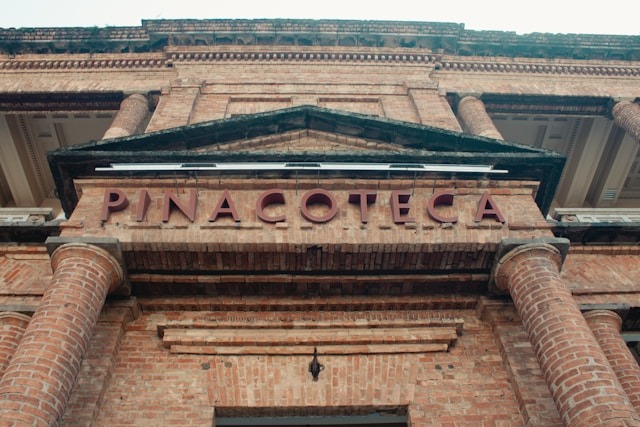
After the Last Supper, head to the Brera district, known for its cobblestone streets, art galleries and a distinctly quieter pace than the city centre. Once home to Milan’s artists and bohemians, the neighbourhood still carries that creative reputation, with small galleries tucked between residential buildings and antique shops lining the main streets.
Have lunch at a small trattoria tucked into one of the side streets, where menus tend to be shorter and more focused than the tourist-heavy spots near the Duomo. Spend the rest of the afternoon at the Pinacoteca di Brera, one of Italy’s top art museums, home to major works by Raphael and Caravaggio. The collection is smaller than Florence’s Uffizi, which makes it possible to see the highlights without spending the entire afternoon inside.
Practical tip: the Pinacoteca gets quieter in the late afternoon, so a visit closer to closing time often means smaller crowds and more space in front of the major paintings.
Evening, 6pm: Navigli canals and dinner by the water
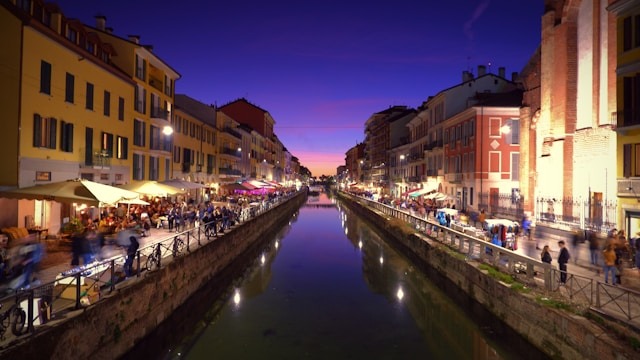
In the evening, head to the Navigli district, home to Milan’s historic canals, once used to transport marble for the Duomo’s construction. The canal system was partly designed with input from Leonardo da Vinci himself during his years living in the city. Only two of the original canals remain visible today, since most were paved over in the 1930s.
The canal-side bars fill up quickly for aperitivo, so arrive a little before sunset to grab a good spot along the water. On weekends, the area also hosts a vintage market along the Naviglio Grande. For dinner, stay along the canal and try ossobuco, a braised veal shank often served with saffron risotto.
Day 3: Sforza Castle and Porta Nuova
Morning, 9am: Sforza Castle and Sempione Park
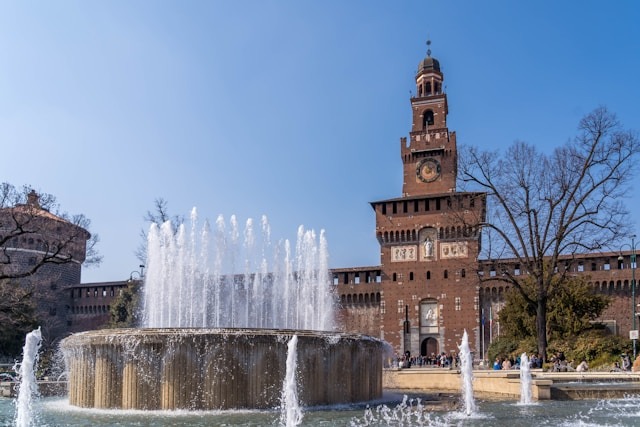
Spend your final morning at the Castello Sforzesco, a 15th-century fortress that now houses several of Milan’s museums. One collection includes one of Michelangelo’s final, unfinished sculptures, the Rondanini Pieta. The castle was built by the Sforza family, who ruled Milan for generations.
The courtyards are free to explore even if you skip the museums, and the red brick towers make for one of the more striking backdrops in the city, especially in early morning light. Afterwards, walk through Sempione Park behind the castle, which leads toward the Arco della Pace, a triumphal arch built in the early 1800s.
Practical tip: the castle museums are free on the first Sunday of the month, so time your visit accordingly if that fits your dates.
Afternoon, 1pm: the fashion district and shopping
After lunch, head to the Quadrilatero della Moda, where the flagship stores of major Italian designers line a compact grid of streets. Via Montenapoleone, the district’s main street, regularly ranks among the most expensive shopping streets in the world. Even without buying anything, window shopping here gives a real sense of why Milan is considered a global fashion capital.
For a more affordable browse, Corso Buenos Aires nearby offers a longer shopping strip with more accessible price points, stretching for over a mile with hundreds of stores.
Practical tip: many boutiques in the fashion district close for a couple of hours in the early afternoon, so check opening hours before making a special trip.
Evening, 5:30pm: Porta Nuova and Bosco Verticale
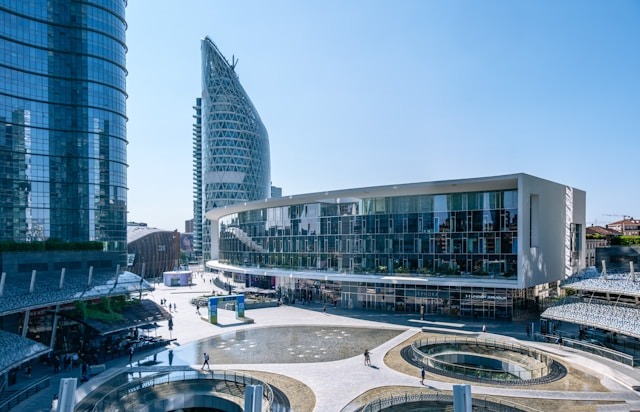
Finish your trip at Porta Nuova, Milan’s modern business district, home to the Bosco Verticale, two residential towers covered in hundreds of trees and thousands of plants. Completed in 2014, the towers were designed to absorb carbon dioxide and produce oxygen, functioning almost like a vertical forest in the middle of the skyline.
The contrast with the historic Duomo you saw on day one sums up Milan’s split personality well. For a final dinner, the Isola neighbourhood near Porta Nuova has a growing restaurant scene with more relaxed prices than the city centre. The area was a working-class district for decades before the Porta Nuova development transformed the skyline around it.
Alternative itineraries
4-day Milan and Lake Como
This version keeps the same 3 days in Milan, then uses your RV to reach Lake Como, less than an hour’s drive away. The lake’s mix of grand villas and small waterfront towns makes for a completely different pace than the city.
- Days 1 to 3: Milan, Duomo, Brera, Navigli and Sforza Castle
- Day 4: Lake Como, lakeside towns like Bellagio and Varenna, and a boat ride across the water
5-day Milan and Turin
For travellers who want to see two of northern Italy’s major cities, this variant adds Turin, home to its own strong food and coffee culture. Turin also served as Italy’s first capital and carries a more elegant, understated feel than Milan.
- Days 1 to 3: Milan, Duomo, Brera, Navigli and Sforza Castle
- Day 4: Turin, the Egyptian Museum and the Mole Antonelliana
- Day 5: Turin’s cafe culture and the Porta Palazzo market, then the drive back or onward
Map of your 3-day Milan itinerary
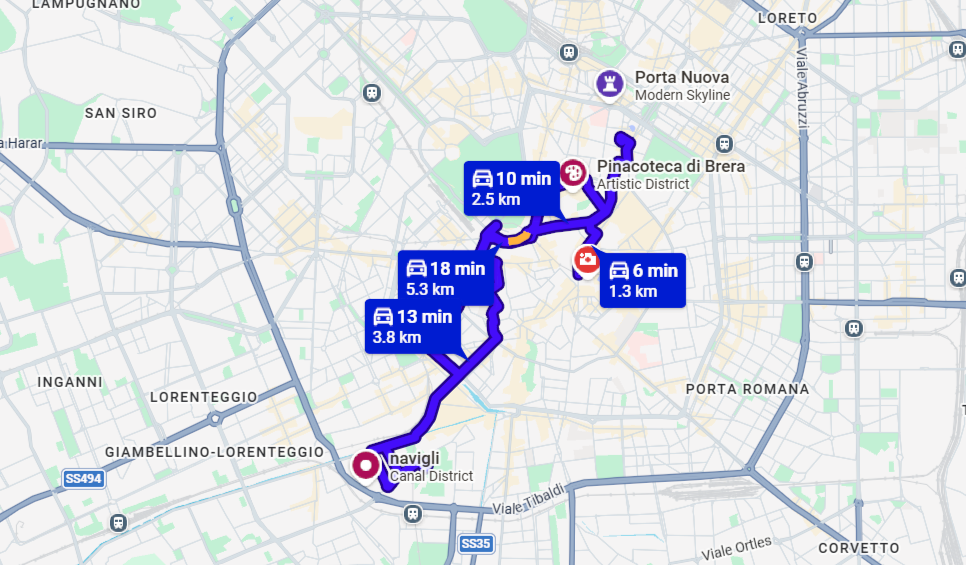
This route stays compact within the city centre. Day one covers the Duomo and Galleria on foot, since both sit within a few minutes’ walk of each other. Day two adds a short metro or tram ride to reach the Last Supper before returning to Brera and the Navigli canals. Day three uses the metro again to connect Sforza Castle, the fashion district and Porta Nuova, three areas spread further apart than the first two days.
If you are basing yourself outside Area C, add the metro or tram connection from your campsite to the nearest city-centre stop. That connection becomes the starting and ending point of each day’s route.
How much is a trip to Milan for 3 days?
A trip to Milan can fit almost any budget, and booking an RV keeps accommodation and food costs down compared with booking hotels and restaurants for every meal. Since parking in central Milan means paying the Area C charge, basing yourself outside the zone is one of the easiest ways to save. Milan also runs noticeably more expensive than smaller Italian cities, especially for dining in the fashion district or the Galleria.
| Category | Budget | Mid-range | High-end |
|---|---|---|---|
| Accommodation | $25 to $50 | $50 to $100 | n/a |
| Food and drink | $35 to $55 | $55 to $100 | $100+ |
| Attractions | $20 to $40 | $40 to $70 | $70+ |
| Transport | $10 to $20 | $20 to $35 | $35+ |
| Daily total | $90 to $165 | $165 to $305 | $305+ |
| 3-day total | ~$270 to $495 | ~$495 to $915 | ~$915+ |
- Budget traveller. Stay at a campsite outside the city centre and cook some meals in the RV. Stick to free sights like the Duomo’s exterior, Sforza Castle’s courtyards and the Galleria.
- Mid-range traveller. Mix cooking in the RV with sit-down meals, pay for the Duomo rooftop and Last Supper tickets, and add a public transport pass. This is the most common approach for a first-time Milan itinerary.
- High-end traveller. Book dinners at well-known restaurants in the fashion district and pay for skip-the-line guided tours of the Duomo and Last Supper, with a shopping budget for the Quadrilatero della Moda.
Plan your trip with Indie Campers
Indie Campers offers a large fleet of campervans and motorhomes, one-way rentals across more than 70 locations, and unlimited mileage on company-owned vehicles. That means the Milan trip can extend to Lake Como or Turin without extra planning or added fees. Flexible cancellation up to 31 days before pick-up and a book-now, pay-later option also mean you can lock in your dates without paying the full amount upfront.
This works best for travellers who want Milan as one stop on a bigger Italian road trip rather than an isolated city break. Park outside Area C, use the metro to explore the city centre, and let the same vehicle carry you on to your next stop when you are ready. Browse the fleet, compare vehicle sizes, and pick the pickup point that fits your route.
Your final planning recap
| Best time to go | Spring, April to May, for mild weather and manageable crowds |
| Recommended budget | $180 to $350 per person for 3 days |
| Districts to visit | Duomo and city centre (day 1), Brera and Navigli (day 2), Sforza Castle and Porta Nuova (day 3) |
| Must-try foods | Risotto alla milanese, cotoletta alla milanese, ossobuco, panettone |
| Recommended transport | RV parked outside Area C, then metro and trams within the city |
| Total distance | Approximately 8 to 11km on foot and by metro across the three days |
| Accommodation | Campsite pitch with RV: $25 to $100 per night |
| Area C charge | €7.50 a day to drive into the historic centre, seven days a week |
FAQs about a 3-day Milan itinerary
How much is a trip to Milan for 3 days?
Around $180 to $350 per person in the mid-range budget. That figure includes accommodation, food, local transport and entry tickets to the main sights. It does not include RV rental, which is priced separately based on vehicle type and season. Basing yourself outside the Area C zone is one of the easiest ways to bring that daily cost down.
Is 3 days enough to see Milan?
Yes, if you focus on one area per day instead of trying to cover the whole city. This itinerary spends day one in the historic centre, day two between Brera and the Navigli canals, and day three around Sforza Castle and Porta Nuova. That split lets you see the major landmarks and still fit in the fashion district and a proper aperitivo each evening.
What are the top three places for first-timers?
The Duomo, the Last Supper and the Navigli canal district. The Duomo anchors the city’s history and offers rooftop views over the whole centre. The Last Supper is one of the most famous paintings in the world, housed a short walk from where it was created. The Navigli canals add a relaxed, local contrast with some of the city’s best aperitivo spots.
What is the most beautiful spot in Milan?
Widely considered to be the Duomo’s rooftop terrace, where you can walk among the marble spires with the city spread out below. The Galleria Vittorio Emanuele II glass dome and Brera’s ivy-covered streets are close runners-up. On a clear day, the Duomo rooftop also offers a distant view of the Alps to the north.
What is the best way to travel in Milan for 3 days?
By metro and tram within the city, combined with an RV parked outside the Area C congestion zone. Driving into the historic centre costs €7.50 a day and adds parking stress that public transport avoids entirely. This combination gives you the flexibility of a road trip without the hassle of navigating central Milan by car.
What is Milan best known for?
Being Italy’s fashion and design capital, home to the flagship stores of major global brands and Milan Fashion Week twice a year. The city is also famous for the Duomo, Leonardo da Vinci’s Last Supper, and dishes like risotto alla milanese and cotoletta alla milanese. Its modern business district at Porta Nuova, including the plant-covered Bosco Verticale towers, shows a side of Italy many visitors do not expect. Milan is also home to two major football clubs, AC Milan and Inter Milan, who share the San Siro stadium.
Do I need to book Milan attractions in advance?
Yes, essential for the Last Supper, since tickets are released in three-month blocks and often sell out within hours. Duomo rooftop tickets also sell out during peak season. Pinacoteca di Brera and Sforza Castle museum tickets are usually easier to get on short notice. If you are visiting during Milan Fashion Week in February or September, book both attractions and accommodation earlier than usual.
How do I get from Milan airport to the city centre?
By train, bus or taxi, depending on which airport you land at. Malpensa connects to the city via the Malpensa Express train in about 50 minutes, while Linate connects via the M4 metro line in around 20 minutes. Bergamo Orio al Serio, used mostly by budget airlines, connects via a shuttle bus that takes roughly an hour. If you are picking up an RV, most rental locations near the airports offer a shuttle to the depot.
Is renting an RV worth it for a Milan trip?
It is worth it if you are combining the city with other stops in Italy, since Milan itself only takes 3 days to enjoy properly. The RV works as your accommodation and transport for the rest of the route, while you park it outside Area C for the Milan portion. For a Milan-only weekend with no other stops, a hotel or short-term apartment may be simpler. The maths tends to favour the RV once your trip includes Lake Como, Turin or another nearby destination.